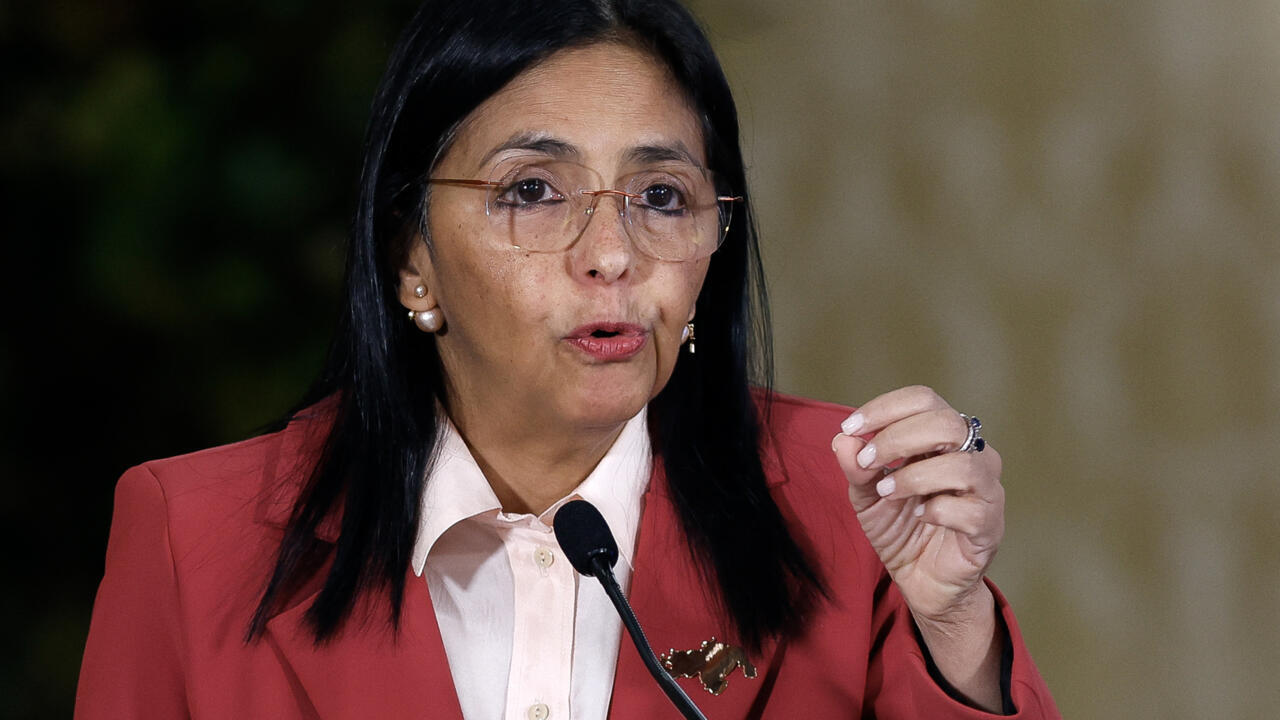
Venezuela’s interim president, Delcy Rodríguez, is expected to visit the United States soon in what analysts describe as a significant shift in relations between Caracas and Washington. The announcement by a senior U.S. official reflects a potential warming of diplomatic ties after months of political turmoil and the dramatic removal of former President Nicolás Maduro from power. Rodríguez will be the first Venezuelan president in more than 25 years to make an official trip to the U.S. capital outside of United Nations events.
According to multiple news reports, Delcy Rodríguez said she is approaching dialogue with the United States “without fear” as she prepares for the visit. This development comes after U.S. Delta Force operatives executed a covert operation that captured Nicolás Maduro and brought him to the United States to face narcotrafficking charges.
Rodríguez’s visit is notable because the last time a sitting Venezuelan president visited the United States outside of the United Nations was more than a quarter century ago. The invitation underscores President Donald Trump’s willingness to engage with Venezuela’s new interim leadership despite longstanding tensions.
Before becoming interim president, Rodríguez served as vice president under Maduro and was known as a longtime insider in Venezuela’s political establishment. Her transition to interim leadership came swiftly after U.S. forces ousted Maduro earlier this month, dramatically reshaping the nation’s political landscape.
Despite her past association with an authoritarian and anti‑American government, Rodríguez appears to be shifting toward diplomacy with Washington. In recent days, she has begun reorganising Venezuela’s military leadership by appointing senior officers to regional commands — a move observers say strengthens her position ahead of sensitive negotiations.
Rodríguez stressed that her approach to U.S. talks would not be hampered by past conflicts. “We are in a process of dialogue, of working with the United States, without any fear, to confront our differences and difficulties… and to address them through diplomacy,” she said.
Her remarks signal a potentially new era of engagement. Political analysts say that if successful, the visit could pave the way for economic collaboration, discussions on oil production and trade, and possibly even adjustments to long‑standing sanctions against Venezuelan officials.
Venezuela sits atop one of the world’s largest oil reserves, and any improvement in relations with the United States carries significant economic and geopolitical implications. In recent weeks, U.S. officials have already brokered deals involving Venezuelan oil exports, foreign investment and the release of political prisoners — a sharp contrast to years of mutual antagonism between the two nations.
Analysts note that while some hardliners in Venezuela’s government may resist closer ties with the United States, Rodríguez’s willingness to engage reflects pragmatic considerations. The country’s struggling economy and need for foreign investment make diplomatic openings with Washington potentially attractive, despite the legacy of prior tensions.
Relations between Caracas and Washington have been fraught for decades, particularly under leaders who championed anti‑American policies and alliances with rival powers. Successive Venezuelan governments prior to Rodríguez made close ties with countries such as China, Cuba, Iran and Russia a central part of their foreign policy.
Rodríguez’s pending visit, therefore, marks a dramatic shift. Observers say it could redefine U.S.–Venezuela relations in the post‑Maduro era if diplomacy and cooperation replace years of hostility.
While specific dates for the visit have not been confirmed, senior U.S. officials have indicated that Rodríguez will engage in discussions on shared interests and challenges. Topics likely to be on the agenda include oil exports, sanctions policy, regional security and cooperation on combating illegal networks.
Experts say that how Washington receives Rodríguez — and whether it extends formal recognition or easing of sanctions — could set the tone for future collaboration or renewed friction. The inclusion of military and economic issues in talks highlights the complexity of reconciling years of mistrust.