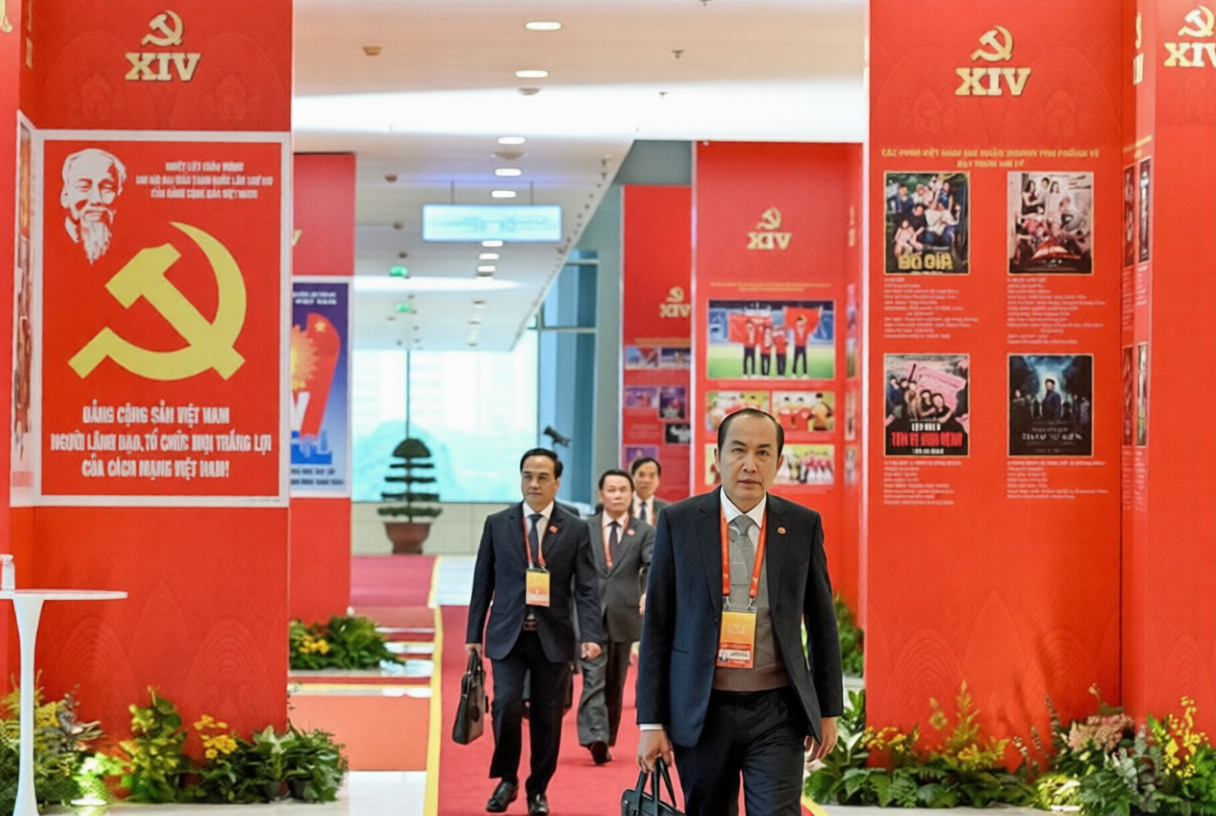
In a decisive outcome that reinforced one‑party rule, the Vietnam Communist Party election results showed the ruling Communist Party of Vietnam winning nearly 97% of the seats in the newly elected National Assembly, according to official data released on March 22, 2026.
The ruling Communist Party of Vietnam secured 482 out of 500 seats in the 16th National Assembly, translating to nearly 97% of total assembly seats — a demonstration of the party’s enduring control over Vietnam’s political landscape. A detailed analysis of Vietnam’s 2026 election candidate dominance reveals how party-aligned candidates overwhelmingly shaped the final outcome.
- Voter participation was reported to exceed 99% turnout, consistent with past elections.
- Most candidates, including independents, were affiliated with or supported by the state‑linked Vietnam Fatherland Front.
This result closely mirrors the party’s previous composition and underscores its virtually unchallenged status in national governance.
Vietnam operates under a one‑party political system, where the Communist Party maintains political authority. Independent candidates rarely contest outside party structures, and even when they do, the party’s influence shapes both nominations and outcomes.
The National Assembly is Vietnam’s top legislative body and constitutionally empowered to approve laws and leadership appointments. However, its practical legislative autonomy is limited given the Communist Party’s guiding role in governance.
The newly elected assembly is scheduled to convene for its first session beginning April 6, 2026.
During this session:
- Lawmakers will be tasked with confirming state leadership positions.
- Tô Lâm, recently reaffirmed as General Secretary of the Communist Party at the January congress, is widely expected to be chosen as President as well, aligning the political structure with similar leadership arrangements seen in other communist states.
The election results reinforce a political system where:
- The Communist Party remains the central driver of policy and state direction.
- Legislative seats serve to formalize the party’s decisions, with limited room for dissenting positions.
This outcome comes at a time when Vietnam is navigating complex regional and global challenges, including economic pressures linked to international instability.