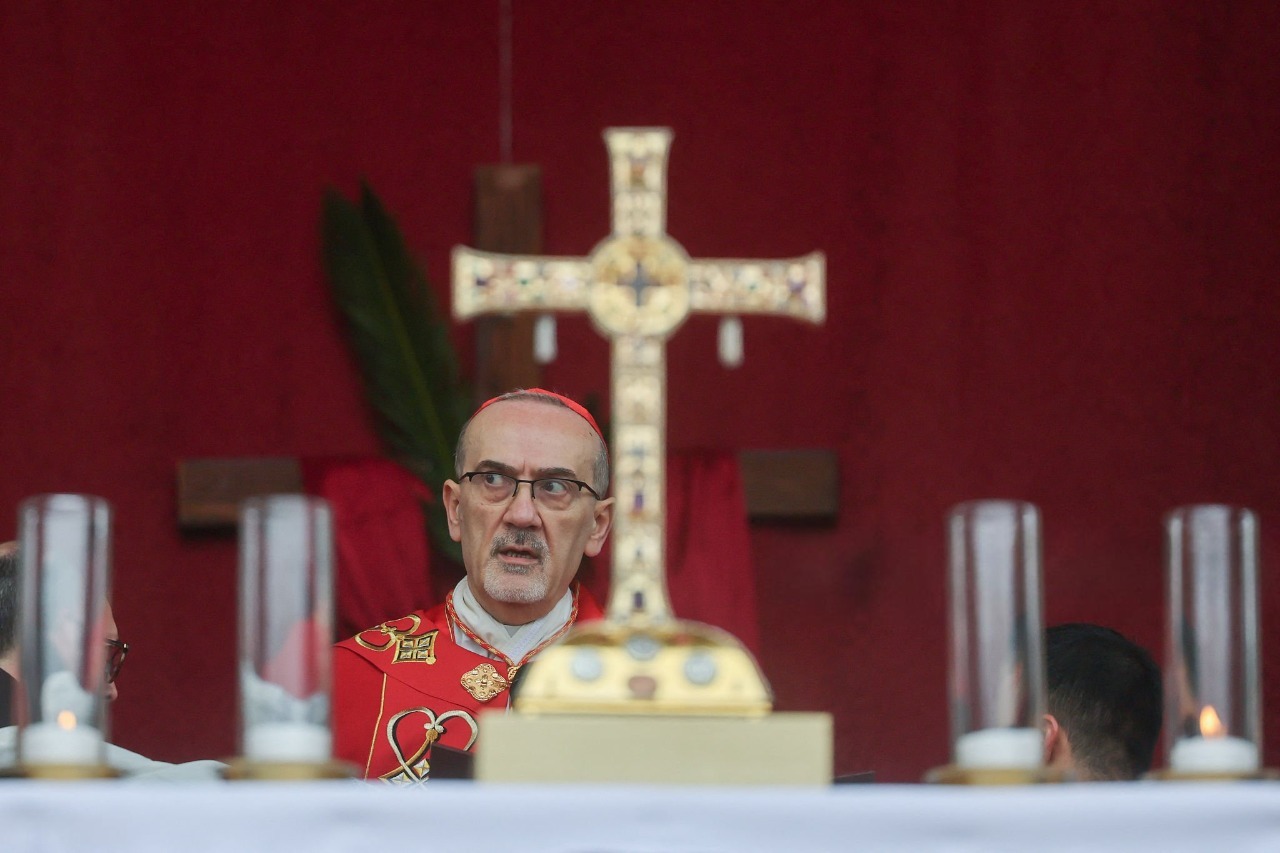
Jerusalem: In a rare and dramatic development during Holy Week, Israel’s prime minister has ordered full and immediate access for the Latin Patriarch of Jerusalem to enter the Church of the Holy Sepulchre after police initially prevented him from doing so on Palm Sunday — a move that drew global criticism and raised concerns about religious freedom amid heightened security warnings.
Unprecedented Blocked Entry on One of Christianity’s Holiest Days
On Sunday morning, as Christians around the world marked Palm Sunday, Israeli police stopped Cardinal Pierbattista Pizzaballa — the Latin Patriarch of Jerusalem — and several accompanying clergy from entering the Church of the Holy Sepulchre in Jerusalem’s Old City.
This building, revered by Christians as the site of Jesus’ crucifixion and resurrection, is traditionally accessible to religious leaders for liturgies and pilgrimages. However, police cited heightened security concerns amid ongoing conflict in the region, including missile threats to Jerusalem holy sites.
Church officials called the block “a manifestly unreasonable and grossly disproportionate measure,” noting that it marked the first time in centuries that authorities prevented the patriarch from entering the site on such a significant religious date.
Government Intervention and Reinstating Access
The decision prompted swift backlash. In response to domestic and international pressure — including condemnation from Western leaders and religious groups — Prime Minister Benjamin Netanyahu intervened. On Monday, he announced via social media that Cardinal Pizzaballa would be granted “full and immediate access” to the Church of the Holy Sepulchre.
Netanyahu emphasised that authorities imposed the initial restrictions solely to protect religious leaders amid regional tensions and missile threats, particularly from Iranian forces. Despite this, he acknowledged the need to respect religious traditions and uphold freedom of worship for all faiths.
Security Context and Broader Restrictions
Authorities explained the blockade within the broader context of security measures affecting multiple holy sites in Jerusalem. Since the conflict escalated earlier in March — particularly after Iranian missile threats landed near Jerusalem’s Old City — Israeli authorities have restricted access to major holy places such as Al‑Aqsa Mosque and the Western Wall to protect public safety.
Officials highlighted that some sites remain temporarily closed due to the absence of adequate shelters or evacuation routes in the densely populated—and historically sensitive—Old City areas. These precautions are intended to protect worshippers from potential threats, including ballistic missile impacts.
Reactions from Religious and Political Leaders
The initial denial of entry ignited international concern. Church representatives condemned what they called a precedent that could undermine widely respected agreements — known collectively as the Status Quo, which governs access and rights at Jerusalem’s various holy sites.
In addition, countries including Greece urged full respect for the Status Quo, calling for arrangements that protect worship access during important observances like Holy Week and Easter.
Meanwhile, some Western officials framed the blockage as a potential violation of religious freedom, urging Israeli authorities to ensure that clergy and worshippers alike can observe sacred traditions without unnecessary restrictions.
Latin Patriarchate Response
The Latin Patriarchate of Jerusalem issued a joint press release expressing sorrow that its leaders were prevented from entering the holy site on Palm Sunday. They noted that the patriarchate had complied with existing restrictions and was simply trying to conduct a private celebration.
Despite the upheaval, the patriarchate emphasised its ongoing commitment to peace, prayer, and pastoral care in the Holy Land — particularly as Christians worldwide continue Holy Week observances leading up to Easter.
Worship and Security Balance
The incident highlights the challenge of balancing religious freedom and security needs amid regional instability. While fully reinstating access for the Latin Patriarch underscores a commitment to tradition and diplomatic respect, the broader situation in Jerusalem remains fluid, with authorities continuing to evaluate safety conditions at holy sites.
As the Easter period progresses, religious communities and civic leaders are closely watching whether similar obstacles will appear and whether they can reach agreements that protect both worshippers and public safety.