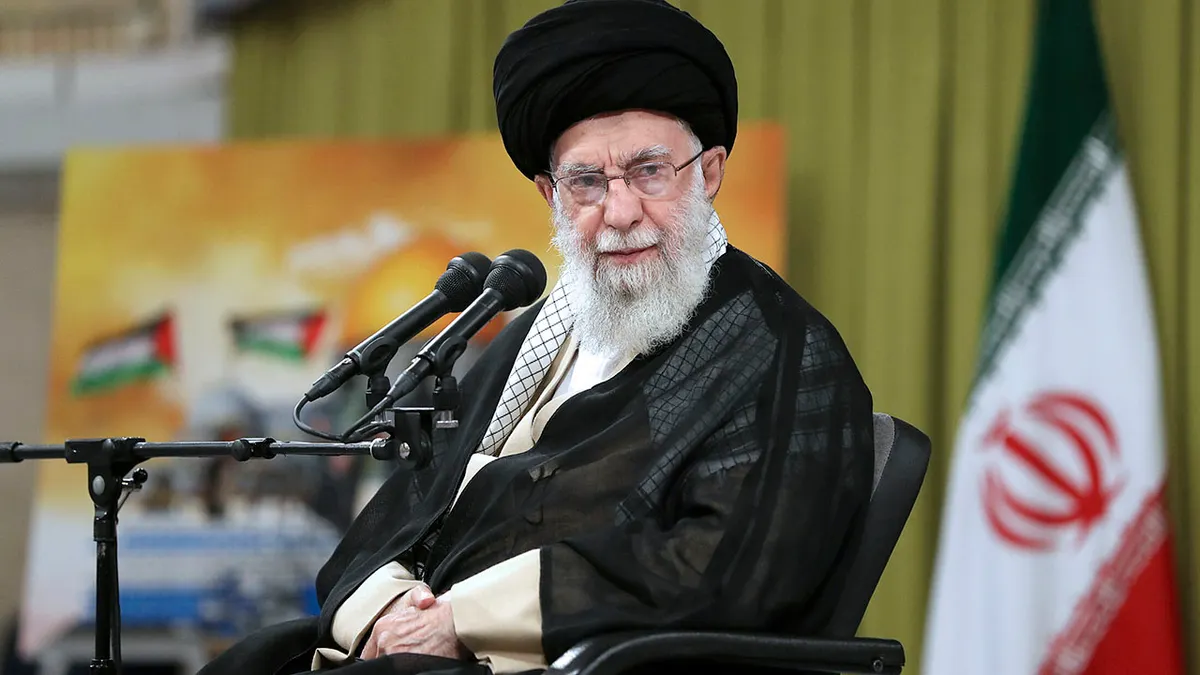
The announcement of the Iran Supreme Leader Khamenei death confirmed by state media marks a historic turning point for the Islamic Republic. Officials said Ayatollah Ali Khamenei, who led the country since 1989, has died. The confirmation came during rising regional tensions after a joint military operation by the United States and Israel.
Iranian state television confirmed his death early Sunday. Authorities declared 40 days of national mourning. Khamenei was 86 years old. He had served as Iran’s highest authority for more than three decades.
State channels aired archival footage and displayed black mourning banners. The images reflected the scale of his influence as both a spiritual and political leader.
Khamenei controlled Iran’s military, judiciary, and foreign policy institutions. He assumed power in 1989 after the death of Ruhollah Khomeini. Since then, he shaped the country’s ideological direction and strategic decisions.
Before the official confirmation, several international sources reported his death. These reports followed large-scale strikes by Israeli and US forces on Iranian targets. Former US President Donald Trump publicly claimed the operation killed Khamenei. Iranian military channels initially denied those claims. State media later confirmed his death.
Authorities have not clarified the exact cause of death. Officials did not say whether he died directly in the strikes or from related circumstances.
Crowds gathered in major Iranian cities after the announcement. Many people carried portraits of Khamenei and attended public mourning events. The atmosphere reflected both grief and uncertainty about the future.
Government leaders urged unity. They promised to defend the principles that defined Khamenei’s rule. Some officials warned that Iran would respond firmly to any external threats.
Iran’s constitution outlines a clear succession process. Authorities quickly formed a temporary leadership structure. A three-member council now oversees state affairs. The council includes senior political and judicial figures until a permanent successor is chosen.
The Assembly of Experts holds the authority to elect the next supreme leader. The body will meet soon to begin that process. The decision will shape Iran’s political direction at a sensitive moment.
Khamenei’s death removes one of the longest-serving leaders in the Middle East. During his tenure, Iran expanded its regional influence. At the same time, it faced persistent tensions with Western nations.
His leadership included decades of confrontation with the United States over nuclear policy. Iran also supported proxy groups across the region. Domestically, authorities faced protests and unrest at various points.
Analysts believe the transition period could test Iran’s internal unity. Power centers within the clerical establishment and the Islamic Revolutionary Guard Corps may influence the outcome.
Regional governments and global powers are watching closely. The next supreme leader will determine how Iran handles security policy, diplomacy, and economic challenges.
For now, the interim leadership council manages state functions. The coming months will prove critical for Iran’s stability and its role in regional politics.