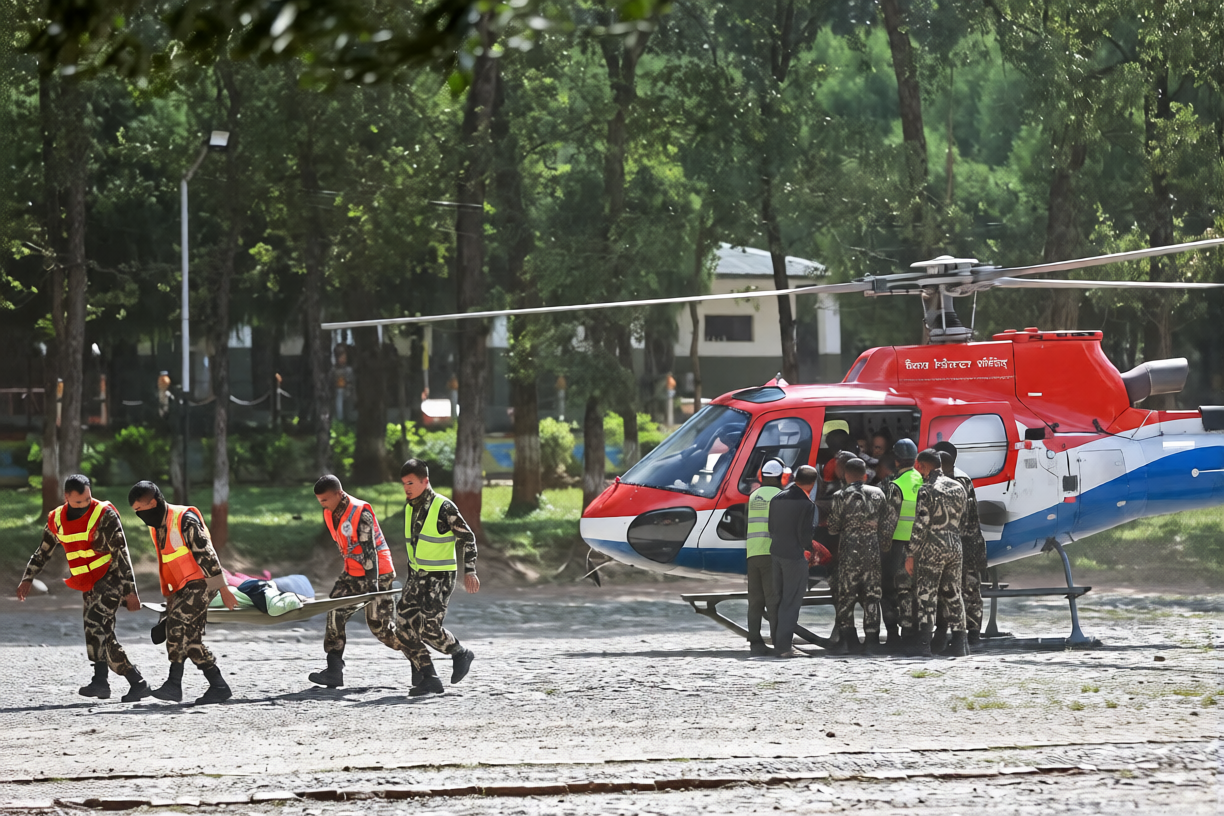
Nepal is facing one of its most devastating natural disasters in recent years after catastrophic flash floods swept through communities near the Himalayan border with China, leaving 579 people dead and 1,924 others missing, according to Nepal’s disaster management authorities. Rescue teams are continuing to search through thick mud, rocks and debris as families wait for information about relatives who remain unaccounted for.
The disaster struck on Wednesday, August 26, after a huge mass of water and debris surged through river valleys in northern Nepal. The Rasuwa district, located near the border with China, has been among the worst-affected areas. Roads, bridges, buildings and other vital infrastructure were damaged or destroyed as floodwaters moved rapidly through the region.
According to Nepal’s National Disaster Risk Reduction and Management Authority, the number of missing people rose sharply as authorities received more reports from remote communities and hydropower sites. The missing include 517 foreign nationals and hundreds of workers employed at hydropower projects along rivers affected by the disaster.
The scale of the disaster has made rescue operations extremely difficult. Many affected communities sit in steep Himalayan valleys, where floodwaters have swept away roads and bridges or buried them under mud and rocks. The flooding has also disrupted communication networks in several areas, making it harder for authorities to reach isolated communities and check on residents.
Helicopters are helping rescue teams evacuate survivors and deliver emergency supplies, while thousands of security personnel are taking part in search and rescue operations. The Associated Press reported that rescue teams had saved more than 3,700 people in Nepal, with around 14,829 security personnel involved in the emergency response.
The disaster has also affected international visitors. Several foreign tourists, pilgrims and trekkers were in the region when the floods struck. Many people had been traveling toward religious destinations in the Himalayan region, including Mount Kailash. Governments from several countries are working with Nepalese authorities to determine the whereabouts of their citizens.
The Australian government, for example, has been providing consular assistance as families seek information about missing relatives. British and other foreign nationals are also among those reported missing. The Guardian reported that entire families and groups of tourists lost contact after the floods swept through remote areas.
The flooding was not limited to Nepal. On the Chinese side of the Himalayan border, authorities reported deaths and hundreds of missing people in Tibet. The disaster has therefore become a major cross-border emergency, with rescue operations taking place in difficult terrain on both sides.
Scientists and disaster experts are also examining what triggered the sudden release of such a massive amount of water. Early assessments suggest that a glacier collapse or ice avalanche may have played a major role. The collapse is believed to have sent enormous quantities of rock, ice and debris into Himalayan river systems, creating a destructive surge downstream.
Reuters previously reported that the initial flood may have been connected to a glacier collapse that created a temporary barrier in the river system. Authorities have since faced additional concerns over water accumulating behind debris and the possibility of further flooding. On Friday, Reuters reported that a lake in Nepal’s Rasuwa district had broken its banks, raising concerns about another potential disaster and forcing authorities to temporarily halt some rescue activities.
The continuing danger has complicated efforts to reach survivors. Rescue workers must navigate unstable slopes, damaged roads and rivers carrying large amounts of debris. Authorities have warned people in vulnerable areas to move toward safer, higher ground as emergency teams monitor changing water levels.
The International Red Cross has estimated that at least 93,000 people may need humanitarian assistance as a result of the disaster. The World Health Organization and UNICEF have also reported damage to schools and health facilities, while thousands of children may require urgent support.
International assistance has begun to arrive as Nepal struggles to manage the enormous scale of the emergency. China has deployed rescue personnel, while countries including India, Japan and Pakistan have offered relief assistance. Nepalese authorities have said they are coordinating international support while continuing to lead rescue operations inside the country.
The disaster has also renewed concerns about the growing risks facing communities across the Himalayas. Scientists have warned that rising temperatures are making high-altitude environments increasingly unstable, potentially increasing the threat of glacier-related landslides, floods and other hazards. A recent analysis by Nature noted that the Nepal disaster could be another warning sign of how climate change is affecting rapidly warming Himalayan regions.
For families of those still missing, however, the immediate priority remains finding their loved ones. Rescue teams are continuing to clear debris and search affected river valleys, while authorities work to identify recovered bodies and update missing-person lists.
With 1,924 people still officially unaccounted for in Nepal, the final human cost of the disaster remains uncertain. Rescue operations are expected to continue as authorities assess the damage, search for survivors and prepare communities for the possibility of further flooding.