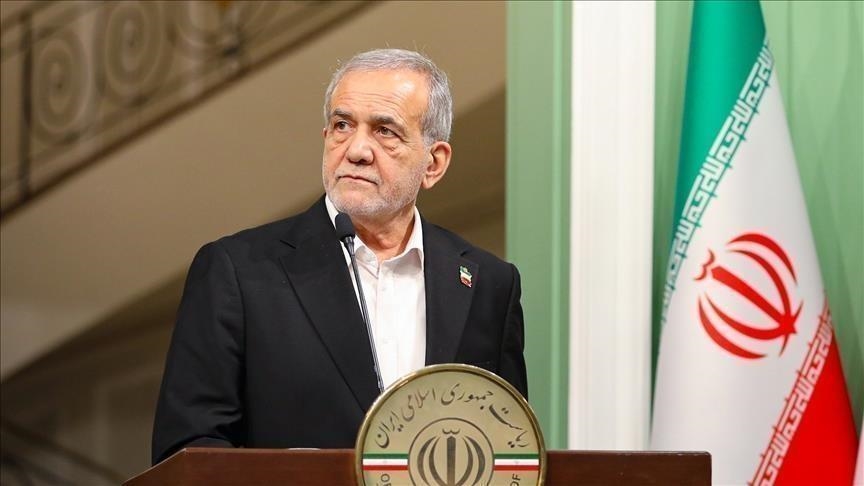
Iran has signaled a potential shift in its military approach as President Masoud Pezeshkian announced that Tehran will stop launching attacks on neighbouring countries unless strikes against Iran originate from their territory.
The statement comes as the Middle East conflict between Iran and its adversaries intensifies, drawing several regional states into the crisis. Pezeshkian delivered the message in a televised address to the nation and confirmed that Iran’s temporary leadership council approved the policy change.
The president also issued a rare apology to neighbouring countries that were affected by recent Iranian missile and drone attacks.
“I apologise on my own behalf and on behalf of Iran to the neighbouring countries that were attacked,” Pezeshkian said during the broadcast.
The new directive appears aimed at preventing the war from spreading further across the Gulf region. Pezeshkian said Iran’s armed forces have been instructed not to target neighbouring states unless attacks against Iran are launched from those countries.
According to the president, the leadership council agreed that “no more attacks will be made on neighbouring countries and no missiles will be fired unless an attack on Iran originates from those countries.”
Iranian officials say the decision reflects Tehran’s intention to avoid confrontation with regional governments while continuing to defend the country against external threats.
The conflict began escalating after large-scale military strikes by the United States and Israel targeted Iranian sites in late February. Iran responded with missile and drone attacks against several locations connected to American or Israeli interests across the region.
Those attacks have affected multiple Gulf states that host foreign military facilities.
Despite the announcement, the wider conflict remains highly volatile. Military exchanges between Iran, Israel and US-aligned forces have continued across several parts of the Middle East.
Reports indicate that Iranian missiles and drones have targeted infrastructure linked to American military operations in the region. In response, Israeli and US forces have conducted additional air strikes on Iranian military facilities and strategic sites.
The war has already caused significant casualties and infrastructure damage in several countries. Analysts warn that any miscalculation could pull more states into the confrontation.
Regional governments have increased security measures while monitoring the situation closely.
During the same speech, President Pezeshkian rejected calls from Washington for Iran to surrender in the conflict. He said the Iranian people would never accept such demands and insisted that the country would continue defending its sovereignty.
The president stressed that Iran does not seek to invade neighbouring countries. Instead, he said Tehran’s military operations are aimed at responding to attacks against its territory.
Those remarks came after political pressure from the United States intensified as the war entered its second week.
The situation has placed Gulf countries in a difficult position. Many of them host American military bases or cooperate with Western security systems.
Iran has repeatedly warned that any country allowing attacks on Iranian territory from its soil could become a target.
This warning has increased fears of further escalation in countries such as Saudi Arabia, United Arab Emirates and Bahrain.
Security experts say the region now faces one of its most serious geopolitical crises in years.
Even limited strikes or missile interceptions could disrupt global oil markets and international trade routes.
Political analysts say Pezeshkian’s statement may represent a limited attempt to reduce tensions with neighbouring states while maintaining pressure on Iran’s primary adversaries.
Some experts believe the announcement could open space for diplomatic negotiations if regional actors support a ceasefire framework.
Others remain cautious. They argue that battlefield developments and political pressure from rival powers could quickly reverse any attempt at de-escalation.
For now, the conflict remains unpredictable. The coming days may determine whether Iran’s pledge to halt attacks on neighbouring countries becomes a meaningful step toward regional stability or simply a temporary tactical move in an expanding war.