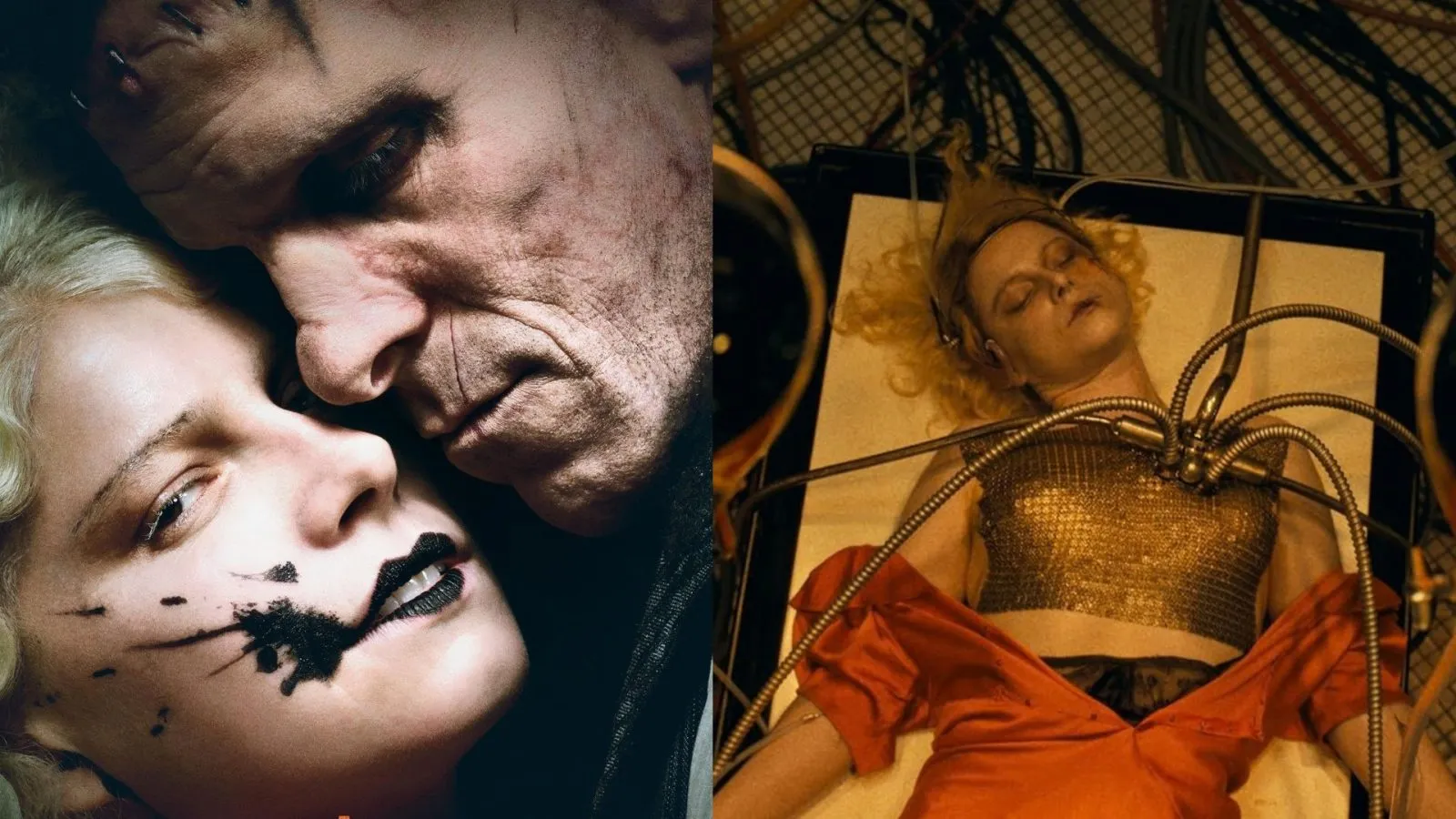
Director Maggie Gyllenhaal has shared new insight into the emotional ending of her latest film The Bride!, a gothic re-imagining of the classic Frankenstein universe. The movie delivers violence, dark humor and romance throughout its story, yet the final scene leaves audiences with a surprisingly hopeful note.
The The Bride movie ending explained discussion began soon after the film premiered in theaters. Many viewers wondered what the closing moment really meant and whether the characters’ story ends in tragedy or transformation.
Gyllenhaal says she intentionally left the ending open to interpretation. Instead of a straightforward conclusion, she wanted a moment that invites viewers to think about love, redemption and the possibility of starting again.
The Bride! places its story in a stylized version of 1930s America. The narrative centers on Frank, played by Christian Bale, a resurrected creature searching for connection. Frank asks a scientist named Dr. Euphronious to create a partner for him.
The scientist eventually revives the body of a young woman named Ida, played by Jessie Buckley. After the experiment succeeds, Ida becomes the Bride.
The two characters quickly develop a complicated relationship. They experience moments of tenderness but also unleash chaos wherever they go. Their journey becomes a violent road trip across America as they flee from authorities and confront a world that refuses to accept them.
Along the way, the Bride begins to inspire other women. Some followers even paint their faces in dark patterns similar to hers, turning the character into a strange symbol of rebellion against oppressive social norms.
As the story progresses, the couple’s actions attract the attention of law enforcement. Detective Jake Wiles, portrayed by Peter Sarsgaard, leads the effort to capture them. His assistant Myrna Mallow, played by Penélope Cruz, shows more sympathy toward the Bride’s situation.
Authorities finally corner Frank and the Bride at a drive-in theater. The confrontation turns violent. Police shoot Frank during the chaos.
The Bride refuses to abandon him. She quickly drives him back to the laboratory of Dr. Euphronious in a desperate attempt to save his life. However, officers follow her there, and the confrontation ends with both Frank and the Bride fatally wounded.
At first, the story appears to conclude with tragedy.
The film’s last moments introduce a surprising twist.
After the shooting, most of the police leave the laboratory. Myrna pauses outside and notices flashes of electricity glowing from inside the building. The scientist has decided to attempt another resurrection.
The camera then cuts to the laboratory table where Frank and the Bride lie motionless. For several seconds, nothing happens. Suddenly, their hands begin to move and slowly reach for each other.
That simple gesture becomes the final shot of the film.
The moment suggests that life might return to both characters once again.
Gyllenhaal describes the ending as an act of courage rather than sentimentality.
According to the director, Dr. Euphronious was never supposed to revive anyone again. The scientist knows that resurrecting the dead crosses ethical boundaries. Yet the love she witnessed between Frank and the Bride convinces her to try anyway.
The filmmaker says that decision reflects the emotional core of the story. Instead of accepting rules or fear, the scientist follows a moment of inspiration.
Gyllenhaal has explained that hope often feels more daring than despair in storytelling. She believes audiences expect dark endings in stories about monsters. By offering a hopeful possibility instead, the film challenges that expectation.
The director also sees the moment as symbolic. The Bride inspires others throughout the story, especially women who feel trapped by social expectations. In the final scene, that inspiration reaches the scientist as well.
The message suggests that compassion and creativity can break patterns that once seemed permanent.
Christian Bale views the relationship between the characters as intense and unpredictable. He believes their connection carries enormous emotional energy.
Frank struggles with guilt and confusion about his existence. The Bride, meanwhile, begins discovering her own strength and identity.
Bale says both characters help each other grow. Frank tries to confront mistakes from his past, while the Bride learns to embrace the power she carries within herself.
Their relationship does not follow traditional romance. At one point Frank even proposes marriage, but the Bride rejects the idea in its conventional form.
Instead, the characters seek something deeper than a simple label. They search for a shared future built on constant reinvention rather than fixed expectations.
Gyllenhaal also revealed that her own family influenced the themes of the film.
The director dedicated The Bride! to her daughters, Ramona and Gloria. She said their personalities shaped the film’s central idea of refusing to fit inside society’s narrow definitions.
According to Gyllenhaal, she once believed that life would be easier if people simply adapted to the roles expected of them. Watching her daughters grow up changed that perspective.
They showed her that trying to force someone into a predetermined path often leads nowhere. That realization became one of the film’s most important messages.
Her older daughter has already watched the film several times and supports her mother’s work enthusiastically. The younger daughter frequently visited the editing room during post-production, watching parts of the movie while the final cut took shape.
The Bride! stands apart from traditional monster films.
Instead of focusing only on horror elements, the movie blends several genres. It combines gothic storytelling, road-movie adventure, romance and social commentary.
Many critics say the film feels both classic and modern at the same time. The characters come from a famous horror myth, yet the story explores contemporary themes such as identity, independence and resistance against social pressure.
Gyllenhaal’s approach reflects a broader trend in modern cinema where filmmakers reinterpret classic stories through fresh perspectives.
The The Bride movie ending explained debate continues across social media and film forums.
Some viewers interpret the final scene as proof that Frank and the Bride survive. Others see it as a symbolic gesture rather than a literal resurrection.
That ambiguity appears intentional.
By refusing to provide a clear answer, Gyllenhaal leaves the audience with a lingering emotional question: can love and connection truly overcome even death?
The closing image of two hands slowly joining suggests that, at the very least, the possibility remains.
For many viewers, that quiet moment becomes the most powerful part of the entire film.